
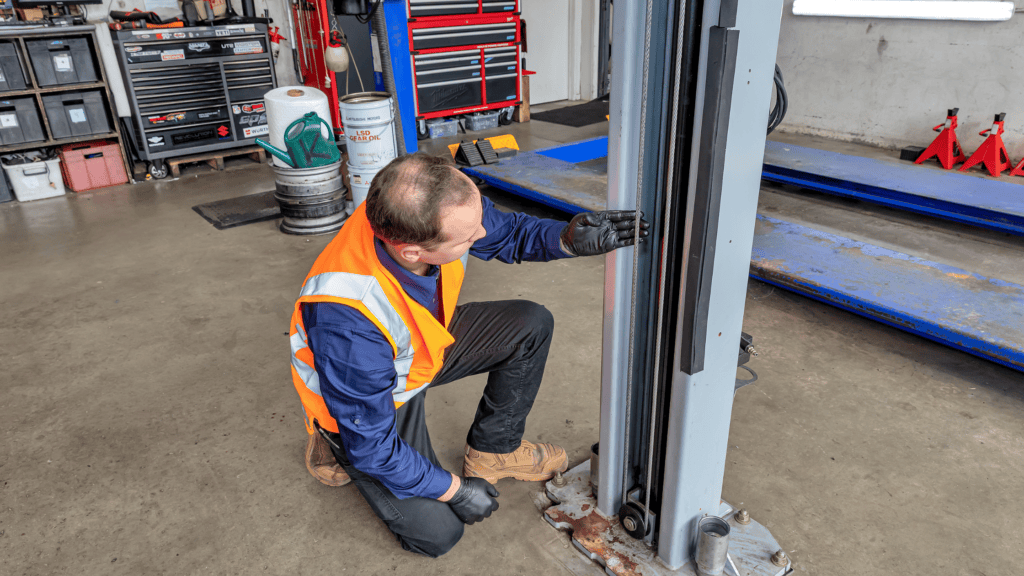
When hoist downtime strikes, most workshop owners focus immediately on the repair invoice. That’s often the smallest cost.
An unexpected hoist failure can disrupt workshop schedules, delay customer bookings, create overtime, leave technicians waiting for available service bays, and force profitable work to be turned away. The financial impact grows with every hour the hoist remains out of service.
Whether caused by worn hydraulic components, electrical faults, or missed servicing, hoist downtime affects far more than the equipment itself. Understanding these hidden costs can help workshops make smarter maintenance decisions, reduce operational risk, and avoid expensive disruptions before they occur.
What Does One Day of Hoist Downtime Really Cost?
Imagine a workshop with four hoists completing 20 vehicles each day.
Early on a busy Monday morning, one of the workshop’s hoists develops a hydraulic fault and is immediately taken out of service.
The workshop loses one service bay while waiting for repairs. Technicians reshuffle jobs, customer bookings are rescheduled, and two repairs roll into the following day. Emergency call-out fees apply, overtime is required to catch up, and several customers experience delays.
Although the repair itself may only take a few hours, the operational impact can continue long after the hoist is back in service. In many cases, the greatest cost isn’t the repair itself, but the disruption to productivity, customer service, and workshop profitability.
The Repair Bill Is Only the Beginning
When a hoist fails unexpectedly, the repair itself is only one part of the overall expense.
Workshops may also face:
- Emergency call-out charges
- Express freight for replacement parts
- Technician travel costs
- Overtime labour
- Cancelled or rescheduled bookings
- Idle technicians
- Lost revenue from work that can’t be completed
In many cases, these indirect costs exceed the price of repairing the hoist.
H&G Workshop Pro Tip
When budgeting for workshop equipment, don’t focus solely on repair costs. Consider the total business impact of equipment downtime, including lost labour, delayed customer bookings, and reduced workshop capacity.
Every Hour of Hoist Downtime Has a Cost
The impact of an out-of-service hoist extends well beyond the repair itself. As downtime continues, its effects ripple through the business, affecting technicians, customers, scheduling, and overall profitability.
1. Idle technicians
Qualified technicians spend time waiting for an available service bay instead of completing productive work.
2. Delayed repairs
Vehicles remain unfinished while waiting for equipment to become available.
3. Longer customer wait times
Customers may need to reschedule appointments or wait longer for vehicle collection.
4. Reduced daily revenue
Completing fewer jobs each day directly affects workshop income. Small delays quickly compound into larger operational problems.
Hoist Downtime Costs Revenue. Delays Cost Customer Trust.
Unexpected hoist downtime doesn’t just disrupt your workshop. It can also damage the trust you’ve built with your customers. Missed collection times, delayed repairs, and cancelled bookings can quickly lead to frustration, particularly for customers who rely on their vehicles for work or have arranged their day around a promised completion time.
For fleet operators, consistent turnaround times are especially important, and repeated delays may encourage them to look for a more reliable service provider.
A workshop’s reputation is built on delivering quality work when promised. Customers who experience reliable service are more likely to return for future maintenance and recommend your business to others.
Conversely, delays caused by equipment failures can affect repeat business, online reviews, and word of mouth. Keeping your hoists properly maintained helps protect not only your workshop’s productivity, but also the confidence customers place in your business.
The Domino Effect of a Hoist Downtime
A hoist downtime rarely affects just one repair. Because vehicle hoists sit at the centre of workshop operations, even a short period of downtime can create disruptions throughout the day. Vehicles may need to be moved between service bays, technicians can spend time waiting for equipment, parts ordered for scheduled repairs may remain unused, and service advisors are often required to rearrange bookings and manage customer expectations.
As these delays accumulate, workshop efficiency declines and recovering the schedule becomes increasingly difficult.
H&G Workshop Pro Tip
Unexpected equipment failures rarely happen at convenient times. They often occur during your busiest periods, when workshop schedules are full and every service bay is needed. Preventative servicing allows you to plan inspections and maintenance around quieter trading periods, reducing disruption to technicians, customer bookings, and daily operations.
By addressing minor wear before it develops into a major fault, you can minimise unplanned downtime and keep your workshop running reliably throughout the year.
➤ Book a service or compliance inspection with us today to protect your workshop from costly downtime.
Emergency Repairs Are Almost Always More Expensive
Emergency repairs typically cost more than scheduled servicing because they involve far more than simply replacing a faulty component. An unexpected hoist failure can trigger a range of additional expenses that quickly increase the overall cost of getting your workshop back up and running, including:
- Emergency call-out fees for urgent technician attendance.
- Premium labour rates for after-hours or priority repairs.
- Rush freight charges to source replacement parts as quickly as possible.
- Limited parts availability, which can extend equipment downtime if components need to be ordered.
- Unplanned workshop disruption, including delayed bookings, idle technicians, and lost revenue while the hoist remains out of service.
By comparison, preventative maintenance allows inspections and component replacements to be scheduled before a failure occurs. Servicing can be planned during quieter trading periods, making maintenance costs more predictable while reducing disruption to workshop operations, customer bookings, and technician productivity.
Budget for Maintenance, Not Breakdowns
Unexpected equipment failures don’t just disrupt workshop operations. They also create unplanned expenses that can place unnecessary pressure on your business. Emergency repairs often involve call-out fees, priority labour rates, expedited parts, and lost revenue from cancelled or delayed jobs, making them far more difficult to budget for than routine servicing.
By contrast, a preventative maintenance programme turns equipment servicing into a predictable operating expense rather than an unexpected financial setback. Setting aside an annual maintenance budget allows workshops to schedule inspections, replace worn components before they fail, and spread maintenance costs more evenly throughout the year.
This approach reduces emergency repair spending, supports more consistent cashflow planning, and helps workshop owners make informed decisions about equipment maintenance without the pressure of an unexpected breakdown.
Over time, this proactive approach can improve the return on your investment by extending hoist service life while reducing the likelihood of major repairs.
Small Problems Become Expensive Problems
Most hoist failures don’t happen without warning.
Common warning signs include:
- Oil leaks
- Slower lifting speeds
- Damaged lifting pads
- Unusual noises
- Electrical faults
- Safety locks not engaging correctly
- Excessive movement
Ignoring these early signs often allows minor wear to develop into larger mechanical failures.
H&G Workshop Pro Tip
Reporting a minor issue today is almost always cheaper than repairing a major failure next month. Small signs such as slower lifting speeds, unusual noises, oil leaks, or worn lifting pads can often be addressed during routine servicing, helping prevent unexpected downtime, more extensive repairs, and disruption to your workshop schedule.
Preventative Maintenance Is an Investment, Not an Expense
Some workshops postpone servicing because the hoist appears to be operating normally. However, preventative maintenance focuses on identifying problems before they interrupt operations.
Routine servicing helps:
- Replace worn components before failure
- Maintain safe operation
- Reduce emergency repairs
- Extend equipment life
- Improve equipment reliability
- Support compliance with manufacturer recommendations
Planned maintenance also allows workshops to replace wear components during scheduled servicing rather than waiting for them to fail unexpectedly. This reduces the likelihood of major repairs while helping extend the service life of the hoist.
Rather than reacting to breakdowns, preventative maintenance allows workshops to manage equipment proactively.
Building a Maintenance Strategy That Protects Your Business
An effective maintenance programme combines regular operator checks with scheduled professional servicing to identify problems before they interrupt workshop operations.
1. Daily operator inspections
Quick visual checks before use.
2. Weekly condition checks
Inspect hydraulic hoses, lifting pads, cables, controls, and safety devices.
3. Scheduled servicing
Professional inspections based on manufacturer recommendations and workshop usage.
4. Planned component replacement
Replace wear items before they fail rather than after.
5. Maintenance records
Keeping accurate service records helps identify recurring issues and supports long-term equipment planning.
H&G Workshop Pro Tip
Workshops that schedule preventative maintenance during quieter trading periods experience far less disruption than those relying on emergency repairs. Planned servicing helps identify worn components early, reducing the risk of unexpected breakdowns when every service bay is needed most.
➤ Call us today for expert preventative maintenance, fast repair services, and professional safety certifications across New Zealand.
Choosing a Hoist Service Partner
When selecting a hoist service provider, look beyond their ability to repair faults. A reliable partner should help you prevent breakdowns through scheduled maintenance programmes, routine inspections, and early identification of worn components before they lead to costly downtime. They should also maintain accurate service records, helping you track maintenance history, plan future servicing, and identify recurring issues that may require attention.
It’s equally important to choose a provider with experienced technicians, access to quality replacement parts, and responsive support when unexpected repairs are needed. Fast response times and readily available parts can significantly reduce downtime and help get your workshop operating again sooner.
Rather than simply fixing problems as they arise, the right service partner works with you to improve equipment reliability and keep your workshop running smoothly throughout the year.
H&G Workshop Pro Tip
When comparing hoist service providers, ask what’s included beyond emergency repairs. Preventative maintenance schedules, detailed service records, qualified technicians, and ready access to replacement parts can make a significant difference to equipment reliability and how quickly your workshop recovers if an unexpected fault occurs.
Frequently Asked Questions
What causes a vehicle hoist to go out of service?
Common causes include hydraulic wear, electrical faults, damaged lifting components, missed servicing, and operator misuse.
How often should a hoist be serviced?
Service intervals depend on manufacturer recommendations, usage, and operating conditions. Workshops with high daily usage may require more frequent inspections.
Is preventative maintenance really cheaper than emergency repairs?
In most cases, yes. Planned servicing helps avoid emergency labour costs, unexpected downtime, and the wider business disruption caused by equipment failures.
Can I continue using a hoist with minor faults?
No. Even small issues should be inspected promptly to maintain safe operation and prevent more costly failures.
How do I reduce hoist downtime?
Regular inspections, preventative maintenance, early fault reporting, and servicing by qualified technicians all help minimise unexpected downtime.
Protect Your Workshop From Costly Hoist Downtime
The true cost of an out-of-service hoist isn’t measured by the repair invoice. It’s measured by lost bookings, disrupted schedules, overtime, idle technicians, and the customers you may struggle to keep waiting.
The good news is that most unexpected hoist failures can be prevented through regular inspections, planned servicing, and timely repairs. Investing in preventative maintenance helps protect not only your equipment, but also your workshop’s reputation, profitability, and ability to deliver consistent service.
Whether you’re operating a single service bay or managing a large multi-bay workshop, Hoist & Garage can help you reduce unexpected downtime through professional inspections, preventative maintenance, and responsive repair services. By keeping your hoists operating safely and reliably, you can minimise disruption, protect customer confidence, and keep your workshop running at its best throughout the year.
Reach out to us to establish a year-round maintenance schedule tailored to keep your workshop operating smoothly.