
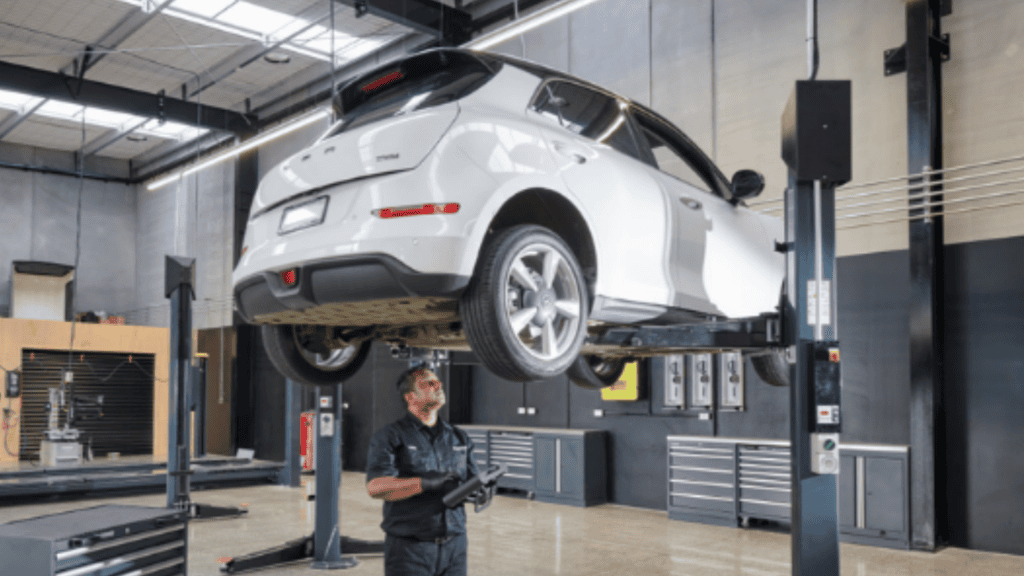
If your workshop is fully booked but technicians still spend time waiting for bays, repositioning vehicles, or working around equipment limitations, your biggest constraint may not be labour. It may be your hoist. The right vehicle hoist can significantly increase daily workshop capacity by improving workflow, reducing setup times, and helping technicians complete more jobs without expanding your premises.
A busy workshop doesn’t necessarily need more technicians or a larger building to service more vehicles. In many cases, the biggest opportunity to increase productivity lies in the equipment already on the workshop floor, particularly the vehicle hoist.
Every minute spent positioning a vehicle, waiting for equipment, or working around an unsuitable lift adds up over the course of the day. While these delays may seem minor individually, they can significantly reduce the number of jobs completed each week.
Choosing the right hoist is about much more than lifting capacity. The correct lift improves technician access, reduces setup times, supports safer working practices, and helps create a smoother workflow from the moment a vehicle enters the workshop until it leaves.
Whether you operate an independent mechanical workshop, dealership, tyre centre, or fleet maintenance facility, the right hoist helps technicians work more efficiently, improves bay utilisation, and supports smoother workflow throughout the day. Choosing equipment that matches your workshop needs can help you service more vehicles without increasing your footprint.
➤ Check out our complete collection of vehicle hoists for different workshop needs.
What Determines Workshop Capacity?
Workshop capacity refers to the number of vehicles a workshop can service efficiently within a given period. Although technician numbers are an important factor, equipment and workflow often have an even greater influence on overall productivity.
Several factors contribute to the workshop capacity.
1. Vehicle turnaround time
The faster each vehicle moves through inspection, repair, testing, and delivery, the more jobs your workshop can complete each day. Delays during any stage reduce throughput and create bottlenecks throughout the workshop.
2. Bay utilisation
Service bays only generate revenue when they’re occupied by vehicles being worked on. A bay sitting idle because technicians are waiting for equipment, repositioning vehicles, or dealing with hoist issues reduces workshop efficiency.
3. Technician productivity
Skilled technicians lose valuable time if they must constantly work around poorly suited equipment. Easy vehicle access, efficient lifting, and unrestricted movement allow technicians to focus on repairs instead of overcoming equipment limitations.
4. Equipment bottlenecks
Specialised equipment that is too slow, too small, or unsuitable for the vehicles being serviced can create queues that affect the entire workshop schedule. A vehicle hoist is often at the centre of this workflow.
H&G Workshop Pro Tip
It’s easy to focus on repair times, but hidden inefficiencies often occur between jobs. If technicians are regularly walking long distances for tools, waiting for another bay to become available, or repositioning vehicles multiple times, your workshop is losing productive minutes throughout the day. Improving workflow often delivers greater productivity gains than simply adding more equipment.
Why Your Hoist Has a Bigger Impact Than You Think
A vehicle hoist influences nearly every repair or maintenance task performed in an automotive workshop.
The process begins before the vehicle even leaves the ground. If positioning the vehicle is awkward or the lifting points are difficult to access, technicians spend more time preparing for each job.
Once elevated, the hoist determines how easily technicians can reach suspension components, brakes, driveline parts, exhaust systems, steering components, and underbody inspections. Poor access often means additional repositioning, slower repairs, and unnecessary technician fatigue. Reducing awkward reaching, bending, and repositioning also helps minimise physical strain, allowing technicians to work more comfortably and consistently throughout the day.
Modern hoists also reduce time through faster lifting and lowering speeds. Saving just one or two minutes on every vehicle may not seem significant, but across dozens of vehicles each week, those minutes become several additional hours of productive workshop time.
Reliable safety lock systems and intuitive controls also streamline operation while helping technicians work with greater confidence.
Consider a workshop completing 20 services per day. If a faster, better-designed hoist saves just three minutes per vehicle through quicker positioning, lifting, and access, that’s around an hour of technician time recovered every day. Over the course of a year, those small savings can translate into hundreds of additional billable hours.
Improving workshop capacity isn’t simply about fitting more vehicles into the schedule. Completing additional jobs without increasing labour or premises costs can improve revenue per service bay while making better use of your existing technicians and equipment.
Choosing the Right Vehicle Hoist for Your Workshop Type
Not every workshop has the same requirements. Selecting a hoist that matches your primary vehicle mix and service offerings is essential for maximising productivity.
The best hoist isn’t necessarily the one with the highest lifting capacity or the most features. It’s the one that aligns with your workshop’s daily workload, available space, and long-term business goals.
General Mechanical Workshops
For most independent workshops servicing passenger vehicles, SUVs, and light commercial vehicles, a quality two-post lift provides outstanding versatility.
Clear floor designs offer several advantages by eliminating overhead obstructions between the lifting columns. Technicians can move transmission jacks, oil drains, and workshop trolleys more easily beneath the vehicle, reducing unnecessary movement throughout the job.
Two-post lifts also provide unrestricted wheel access, making them ideal for suspension repairs, brake servicing, steering work, clutch replacements, and general maintenance.
Tyre and Wheel Alignment Workshops
Workshops specialising in tyres, suspension, and wheel alignments benefit from four-post alignment hoists specifically designed for these tasks.
Integrated slip plates, turntables, and alignment-ready platforms reduce setup times while improving measurement accuracy. Vehicles remain securely positioned throughout the alignment process, allowing technicians to move efficiently from inspection to adjustment.
This dedicated workflow helps increase the number of alignments completed each day.
Fleet Maintenance Workshops
Fleet operators often service utes, vans, utilities, and larger commercial vehicles with varying wheelbases and weights.
Heavy-duty four-post hoists with higher lifting capacities provide the flexibility needed to accommodate these vehicles safely. Investing in equipment designed for larger vehicles reduces scheduling conflicts and prevents technicians from waiting for suitable lifting equipment to become available.
Dealership Service Centres
Authorised dealerships often have additional requirements beyond lifting capacity.
OEM-approved hoists support manufacturer servicing procedures while providing consistent lifting points across a wide range of vehicle models. Standardised equipment also helps technicians work more efficiently, particularly in high-volume service departments where consistency is critical.
H&G Workshop Pro Tip
Many workshops choose a hoist that suits the vehicles they currently service, only to find it limiting a few years later as more utes, electric vehicles, and larger SUVs enter the market. Selecting a hoist with additional lifting capacity and greater arm versatility can help future-proof your investment and reduce the need for an early upgrade.
Hoist Features That Save Time Every Day
Certain design features may appear minor, but they can deliver measurable productivity improvements over thousands of vehicle lifts.
1. Faster lifting speeds
Modern hydraulic systems raise and lower vehicles quickly while maintaining smooth operation. Even saving one minute per service can translate into several extra jobs each month.
2. Better vehicle access
Good underbody access allows technicians to complete brake, suspension, exhaust, transmission, and driveline repairs more efficiently. Less repositioning means fewer interruptions during the repair process.
3. Clear floor construction
Clear floor hoists eliminate floor-level obstructions between lifting posts, making it easier to move equipment beneath the vehicle. This creates a cleaner workflow while reducing trip hazards.
4. Asymmetrical lifting arms
Asymmetrical arm configurations make vehicle positioning faster while providing greater door clearance. Technicians can enter and exit vehicles more comfortably, improving efficiency during inspections and diagnostics.
5. Automatic safety locking systems
Automatic safety lock engagement simplifies lifting procedures by reducing manual steps while maintaining safe operation. Faster setup allows technicians to begin work sooner without compromising safety.
H&G Workshop Pro Tip
As workshops grow, specialised lifting equipment can significantly improve efficiency. Pairing two-post lifts for general mechanical work with four-post alignment hoists for wheel alignments and suspension servicing allows technicians to complete more jobs without competing for the same equipment.
Matching Vehicle Hoist Capacity to Your Vehicle Mix
Bigger isn’t always better when selecting a workshop hoist.
Choosing a hoist with more lifting capacity than your workshop requires may increase purchase costs unnecessarily, while selecting a hoist that is too small can limit the types of vehicles your workshop can service.
When evaluating a hoist, consider:
- The maximum vehicle weight you regularly service
- Wheelbase compatibility
- Lifting height requirements
- Arm reach and lifting point flexibility
- Ceiling height
- Future business growth
Many workshops are seeing increasing numbers of larger SUVs, dual-cab utes, electric vehicles, and light commercial vans. Selecting a hoist that accommodates your current workload while allowing for future changes helps protect your investment.
H&G Workshop Pro Tip
Capacity is only one part of the equation. Consider arm reach, lifting height, drive-through clearance, and compatibility with the types of vehicles you service most often. A hoist that suits your workshop layout and vehicle mix will usually deliver greater long-term productivity than simply choosing the highest-rated model.
Common Hoist Mistakes That Reduce Workshop Capacity
Even experienced workshop owners can make equipment decisions that unintentionally limit productivity.
1. Using one hoist for every job
No single hoist is ideal for every application. A workshop performing mechanical repairs, alignments, tyre fitting, and heavy vehicle servicing may benefit from multiple hoist types tailored to different tasks.
2. Buying purely on price
The cheapest hoist may have slower lifting speeds, fewer productivity features, or lower long-term reliability. Over years of daily operation, these limitations can cost considerably more than the initial purchase savings.
3. Choosing insufficient lifting capacity
Undersized hoists restrict the vehicles your workshop can accept, potentially turning away profitable work.
4. Ignoring workshop layout
Even an excellent hoist cannot compensate for poor equipment placement. Inefficient movement between bays, tyre machines, diagnostic equipment, and tool storage reduces technician productivity.
5. Delaying maintenance
Regular servicing helps maintain lifting performance and minimises unexpected downtime. A hoist that operates reliably every day contributes directly to workshop capacity.
Optimising your workshop layout is just as important as selecting the right equipment. Read our guide on designing a workshop for maximum vehicle throughput to learn how layout, equipment placement, and workflow can further improve productivity.
H&G Workshop Pro Tip
Before choosing a hoist, consider slab thickness, ceiling height, door clearances, power supply, and surrounding equipment. A well-planned installation helps avoid costly modifications later and ensures the hoist integrates seamlessly into your workshop workflow.
Vehicle Hoists Are Part of a Complete Workshop Workflow
A vehicle hoist should never be considered in isolation.
Its placement affects how technicians interact with wheel balancers, tyre changers, alignment systems, diagnostic equipment, transmission jacks, tool cabinets, and parts storage.
An efficient workshop layout minimises walking distances, reduces unnecessary vehicle movements, and keeps frequently used equipment within easy reach. When combined with appropriately selected hoists, this creates a more efficient workflow that supports higher daily throughput while reducing technician fatigue.
More hoists don’t necessarily mean more technicians
The logic is straightforward: extra hoist capacity means a vehicle waiting on parts can stay on the hoist rather than having to come down and be moved to another area. Without that spare capacity, the job may need to come off the hoist, be moved out of the bay, and then be repositioned and lifted again when the parts arrive. That’s additional vehicle handling that doesn’t add value to the repair.
The same principle applies when looking at overall workshop capacity. If your workshop has four technicians and four hoists, adding two more hoists doesn’t mean you suddenly need six technicians to make use of them. It gives your existing four technicians more flexibility. Vehicles can remain positioned ready for work, technicians can move between jobs more efficiently, and less time is spent shuffling vehicles simply to free up a bay.
Workshop layout should also support a logical vehicle flow from arrival to completion. Positioning hoists to allow drive-through traffic where possible reduces the need for time-consuming reversing and vehicle repositioning, particularly in busy workshops.
Likewise, locating parts storage, compressed air outlets, diagnostic equipment, and EV charging stations within easy reach of service bays helps technicians spend more time working on vehicles and less time walking across the workshop. Although these improvements may seem small individually, together they can reduce delays, improve safety, and increase the number of vehicles your workshop can service each day.
Many workshops discover that repositioning equipment or replacing an unsuitable hoist delivers significant productivity improvements without requiring costly building extensions.
H&G Workshop Pro Tip
General service bays that handle routine maintenance should be located close to the workshop entrance and within easy reach of tyre changers, wheel balancers, diagnostic equipment, and frequently used tools. Reducing unnecessary vehicle movement helps keep work flowing efficiently throughout the day.
➤ Explore our full range of 2-post hoists, 4-post hoists, scissor, and knuckle lifts.
Signs It’s Time to Upgrade Your Workshop Hoist
Your current hoist may be limiting workshop capacity if you regularly experience any of the following:
- Technicians waiting for available lifting bays
- Increasing queues of vehicles awaiting service
- Difficulty accommodating newer or larger vehicles
- Frequent equipment breakdowns
- Rising maintenance costs
- Slow lifting or lowering performance
- Expanding fleet maintenance work
- Growing demand for electric vehicle servicing
If several of these issues sound familiar, upgrading your lifting equipment may provide a faster return on investment than expanding your workshop or hiring additional staff.
Frequently Asked Questions
What type of hoist is best for a busy workshop?
The best hoist depends on your primary workload. Two-post lifts suit general mechanical repairs, while four-post alignment hoists are ideal for tyre and suspension specialists. Fleet workshops often benefit from heavy-duty four-post lifts with higher lifting capacities.
How much can the right hoist improve workshop productivity?
The right hoist reduces setup time, improves technician access, speeds lifting operations, and minimises equipment bottlenecks. Small time savings on every job can result in significantly higher daily vehicle throughput.
Should I choose a two-post or four-post hoist?
Two-post lifts provide excellent underbody access for mechanical repairs. Four-post lifts are generally better suited to wheel alignments, inspections, and servicing larger vehicles. Your choice should reflect the type of work your workshop performs most frequently.
How do I choose the right lifting capacity?
Select a hoist that comfortably accommodates your current vehicle mix while allowing for future growth. Consider vehicle weight, wheelbase, lifting height, and the increasing popularity of larger SUVs, utes, vans, and electric vehicles.
Can upgrading a hoist delay the need for workshop expansion?
Yes. Improving workflow and reducing bottlenecks often enables workshops to service more vehicles within their existing footprint. For many businesses, upgrading equipment offers a more cost-effective solution than adding extra service bays.
Increase Capacity by Investing in the Right Equipment
A vehicle hoist is far more than a piece of lifting equipment. It influences technician efficiency, vehicle turnaround times, workshop safety, and ultimately the number of vehicles your business can service each day.
By selecting a hoist that matches your workshop’s vehicle mix, service offerings, and long-term growth plans, you can reduce bottlenecks, improve workflow, and maximise the productivity of every service bay.
Before investing in additional floor space or expanding your workforce, take a closer look at the equipment already supporting your technicians. Every minute saved in the workshop contributes to greater productivity, higher profitability, and better customer service. Investing in the right hoist is about creating a workshop that operates more efficiently today while remaining ready for the demands of tomorrow.
Whether you’re upgrading a single service bay or planning a complete workshop fit-out, Hoist & Garage can help you choose equipment that supports both your current workload and future growth. Our team works with you to understand your vehicle mix, available floor space, workflow, and long-term growth plans before recommending the right lifting solution.
Get in touch with us to find the right lifting equipment for your workshop and the work you do.