
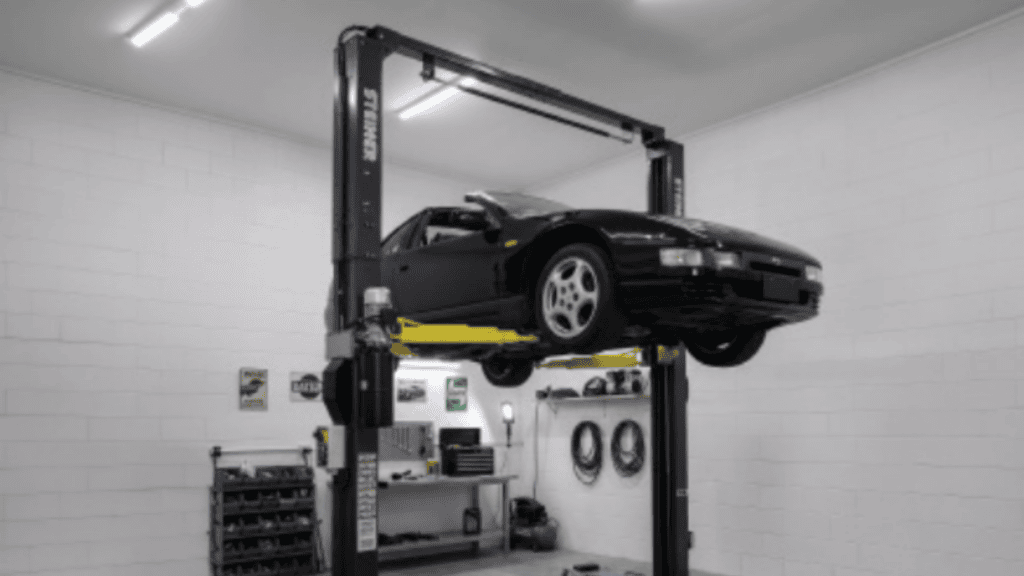
There’s more to a vehicle hoist inspection than simply running the hoist up and down and calling it good.
It’s about making sure the hoist is in good condition; the safety systems are working properly and there aren’t any issues that could affect its safe operation.
So, what are we actually looking at?
Quite a bit.
First, we want to know what we’re dealing with
Before starting the physical inspection, it’s useful to know a bit about the hoist.
What type is it? How old is it? Has it had any repairs? Have parts been replaced? Has anyone using it noticed anything different?
The manufacturer’s information is important here, too. It gives us the hoist’s rated capacity and tells us what it was designed to do, along with information about its components and safety systems.
It doesn’t tell us everything, but it gives us a good starting point.
Then we start looking
The first thing you’ll notice during an inspection is probably the amount of time spent looking at things that most people don’t think about.
- Hoist structure
- Lifting arms
- Pads and adaptors
- Cables and chains
- Hydraulic components
- Anchors
We’re looking for wear, damage, corrosion, leaks, loose or damaged components and anything else that doesn’t look right.
Sometimes there’s an obvious problem.
Other times it’s something small that tells you to have a closer look.
That’s why a proper inspection isn’t something you want to rush through.
We don’t just look at it. We operate it.
This is an important part of the inspection.
A hoist can look perfectly fine while it’s sitting there.
Once you start operating it, you can pick up things that aren’t obvious when it’s stationary.
- Does it lift smoothly?
- Is there any unusual noise?
- Is it moving unevenly?
- Are there any unexpected movements?
- Do the controls work properly?
- What about safety locks?
These are the sorts of things we’re paying attention to while the hoist is operating.
You get a much better idea of how the equipment is actually behaving when you see it working.
The safety locks get plenty of attention
The lifting system isn’t the only thing keeping a vehicle where it should be.
Depending on the hoist, there are mechanical locks or other safety systems that need to engage properly.
These get checked as part of the inspection.
It’s worth paying particular attention here because a hoist can still lift and lower a vehicle even if there’s a problem with one of its safety systems.
Just because something works doesn’t necessarily mean everything is working as it should.
Then there are the bits that support the vehicle
On a two-post hoist, for example, we’ll look closely at the lifting arms, pads, and adaptors.
These get adjusted and used constantly, so wear and damage can develop over time.
We’re looking for excessive movement, damaged components, worn pads, and anything else that could affect how the vehicle is supported.
It’s one thing for the hoist to lift the vehicle.
It’s another thing to make sure the vehicle is being properly supported once it’s up there.
The floor and anchors aren’t something we can ignore
It’s easy to focus on the hoist itself and forget what’s holding it in place.
The anchors need to be checked, as does the area around the installation.
We’re looking for signs of movement, damage, or anything else that could affect the installation.
The condition of the floor matters, too.
If the floor has been damaged, altered, or doesn’t meet the manufacturer’s requirements for the hoist, that’s something that needs to be addressed.
A perfectly good hoist isn’t much use if the installation it’s sitting on isn’t right.
What if we find something wrong?
This is where people sometimes jump straight to, “Does that mean the hoist has failed?”
Not necessarily.
Finding an issue doesn’t automatically mean the hoist needs replacing it.
First, we need to work out what the issue is and how significant it is.
Some things can be repaired relatively easily. Others may require parts to be replaced or further work before the hoist can be used again.
If an issue means the hoist doesn’t meet the requirements for certification, that issue needs to be sorted before the equipment can be put back into service, depending on what has been found and the requirements that apply.
The important thing is to deal with the actual problem rather than trying to work around it.
A service and an inspection aren’t quite the same thing
This is another area where there can be a bit of confusion.
A service is about maintaining the equipment. You’re looking at wear, maintenance items and anything that needs attention to keep the equipment operating properly.
An inspection is about assessing the condition of the equipment and identifying anything that could affect its safe operation or the requirements it needs to meet.
They’re related, but they’re not interchangeable.
A hoist can be serviced regularly and still needs an inspection.
And an inspection can tell you that some servicing or repair work is needed.
Keep a record of what’s been done
Once the inspection is finished, the findings need to be recorded.
It sounds basic, but good records make life much easier.
You can see when the hoist was inspected, what was found, what was repaired, and which parts have been replaced.
That becomes particularly useful when you’re dealing with older equipment.
If the same issue comes up again six months down the track, you can look back and see what’s already been done rather than starting from scratch.
The point isn’t finding faults. It’s to know what’s going on.
That’s really what a good inspection comes down to.
We’re not looking for reasons to take equipment out of service.
We’re looking at the hoist properly, so everyone knows what condition it’s in and whether anything needs attention.
A hoist can look fine from across the workshop. It can even work normally.
That doesn’t mean there isn’t something worth checking.
The idea is to find problems early, deal with them properly, and keep the equipment in a condition where it can do its job safely.
Because when a technician is working underneath a vehicle, you want to know the hoist has been properly looked after.
Is your hoist due for certification?
Hoist & Garage can inspect your vehicle hoists nationwide and flag any issues that may need attention.
Contact us to book an inspection. Give us a call at 0800 436 436 or email us at bookings@hoistandgarage.co.nz.