
Electric vehicles (EVs) are changing more than the way vehicles are powered. They are also changing how automotive workshops need to be designed, equipped, and operated.
As EV adoption increases, workshops face a new set of considerations. Electric vehicles introduce different servicing requirements, higher vehicle weights, advanced electronics, high-voltage systems, and new safety procedures.
For decades, workshops have been built around the requirements of internal combustion engine vehicles. Service bays, vehicle hoists, tools, and workflow processes have all been developed around familiar repair tasks such as oil changes, exhaust repairs, engine servicing, and transmission work.
For workshop owners and service managers, preparing for EV servicing is not simply about purchasing new tools. It requires reviewing how vehicles move through the workshop, how service bays are configured, and whether existing equipment can support future vehicle requirements.
The workshops that adapt early will be better positioned to improve safety, increase efficiency, and support the changing needs of their customers.
What Makes EV Workshops Different From Traditional Workshops?
Electric vehicles share many similarities with conventional vehicles. They still require tyres, wheel alignments, suspension repairs, inspections, diagnostics, and general maintenance.
However, the way workshops perform these tasks is changing.
EVs introduce several factors that can influence workshop design, including vehicle weight, battery location, safety requirements, and specialised servicing procedures.
1. EVs Are Heavier Than Many Equivalent Vehicles
One of the biggest differences between EVs and traditional petrol or diesel vehicles is weight.
Large battery packs can add significant mass, with recent EU data showing battery-electric cars averaging 1,878 kg, compared with 1,479 kg for combustion-only cars, a difference of 399 kg, or around 27%. The gap varies by vehicle, however, with factors such as battery size, vehicle class and design all playing a role. For workshops, this means some EVs, particularly larger SUVs and commercial vehicles, can place significantly greater loads on lifting equipment than technicians may be accustomed to handling.
This has direct implications for workshop equipment.
Vehicle hoists, for example, need to provide:
- Suitable lifting capacity
- Stable vehicle positioning
- Correct lifting point access
- Reliable operation under higher loads
A workshop that was designed around smaller passenger vehicles may need to review whether its existing lifting equipment can safely support newer EV models.
2. EV Servicing Requires Different Workflows
Traditional vehicle servicing often includes mechanical repairs such as engine, transmission, and exhaust work. EVs reduce the need for many of these tasks while introducing greater emphasis on diagnostics, high-voltage systems, battery inspections, and electronic components.
Common areas of focus include:
- Battery systems
- Electric motors
- High-voltage components
- Thermal management systems
- Electronic control systems
- Advanced driver assistance systems (ADAS)
This changes how technicians use workshop space.
A workshop may spend less time on conventional engine repairs but more time on diagnostics, electrical checks, software updates, battery inspections, and specialised repairs.
As a result, workshop design needs to support a wider range of service activities rather than simply adding more repair bays.
H&G Workshop Pro Tip
EV adoption is increasing, but workshops still need to service a wide range of petrol, diesel, hybrid, and electric vehicles. When investing in new equipment, consider solutions that provide flexibility across multiple vehicle types rather than equipment designed for only one application.
How EVs Influence Workshop Layout Design
A workshop layout designed for traditional vehicles may not always provide the best workflow for EV servicing.
Future-ready workshops need to consider how vehicles enter, move through, and leave the facility.
1. Creating Dedicated EV Service Areas
As EV servicing becomes more common, workshops servicing higher numbers of EVs may benefit from creating dedicated EV work areas.
A designated EV service bay can help improve:
- Safety management
- Technician workflow
- Equipment organisation
- Vehicle movement
This does not necessarily mean every workshop needs a separate EV-only bay. However, having a planned area for EV work can make servicing more efficient.
Important considerations include:
- Clear identification of EV work zones
- Safe access around vehicles
- Storage for specialised equipment
- Separation from unrelated workshop activities where required
For dealerships and larger service centres handling higher EV volumes, dedicated EV areas may become increasingly valuable.
2. Allowing More Space Around Vehicles
EV repairs can require additional consideration around vehicle positioning.
Battery inspections, underbody servicing, and specialised repairs may require technicians to work around larger components underneath the vehicle.
A crowded workshop layout can create unnecessary movement, reduce efficiency, and increase safety risks.
When reviewing workshop design, consider:
- Vehicle access around each bay
- Technician movement
- Equipment positioning
- Space for future servicing requirements
A workshop that allows vehicles, technicians, and equipment to move efficiently will always be better positioned for changing vehicle technology.
Workshops planning for increased EV servicing may also consider the location of vehicle charging points, electrical supply capacity, and cable management when reviewing workshop layouts.
3. Designing Flexible Service Bays
One of the biggest mistakes workshops can make is designing bays around only one type of job.
A flexible service bay can support a wider range of vehicles and repairs.
For example, a bay that can handle:
- General servicing
- EV inspections
- Wheel alignment preparation
- Suspension work
- Diagnostic procedures
provides more value than a bay restricted to a single application.
The goal is not simply to add more equipment. It is to create a workshop where every bay can contribute effectively to vehicle throughput.
H&G Workshop Pro Tip
A service bay that can support multiple repair types gives your workshop greater flexibility. Consider whether each bay can handle different vehicle requirements, equipment access, and future servicing needs rather than dedicating space to only one type of job.
How Vehicle Hoists Need to Adapt for EV Servicing
Vehicle hoists remain one of the most important pieces of equipment in any automotive workshop. However, EV adoption changes what workshops need to consider when selecting lifting equipment.
Higher Capacity Requirements
Because EVs are often heavier than comparable vehicles, workshops need to ensure their hoists are suitable for the vehicles they intend to service.
A correctly specified hoist helps technicians:
- Safely lift vehicles
- Access underbody components
- Perform inspections efficiently
- Complete repairs without unnecessary delays
Choosing a hoist based only on current vehicle demand can limit future workshop capability.
Battery Access and Underbody Servicing
The battery pack is one of the most important components of an EV and is typically located underneath the vehicle. This makes underbody access increasingly important.
Workshops performing battery removal or replacement may also require dedicated battery lifting tables or other battery handling equipment to safely lower, transport, and reinstall high-voltage battery packs.
The right lifting equipment can help technicians safely access manufacturer-designated lifting points and perform tasks such as:
- Visual inspections
- Component checks
- Suspension repairs
- Underbody servicing
A hoist that supports efficient access can reduce unnecessary vehicle movement and improve bay productivity.
H&G Workshop Pro Tip
While EV weight is an important consideration, the best hoist is the one that matches how your workshop operates. Think about the vehicles you service, the repairs you perform, available floor space, and whether the equipment can support future growth.
Selecting the Right Hoist for Your Workflow
Different lifting solutions support different workshop requirements.
1. Two-post hoists
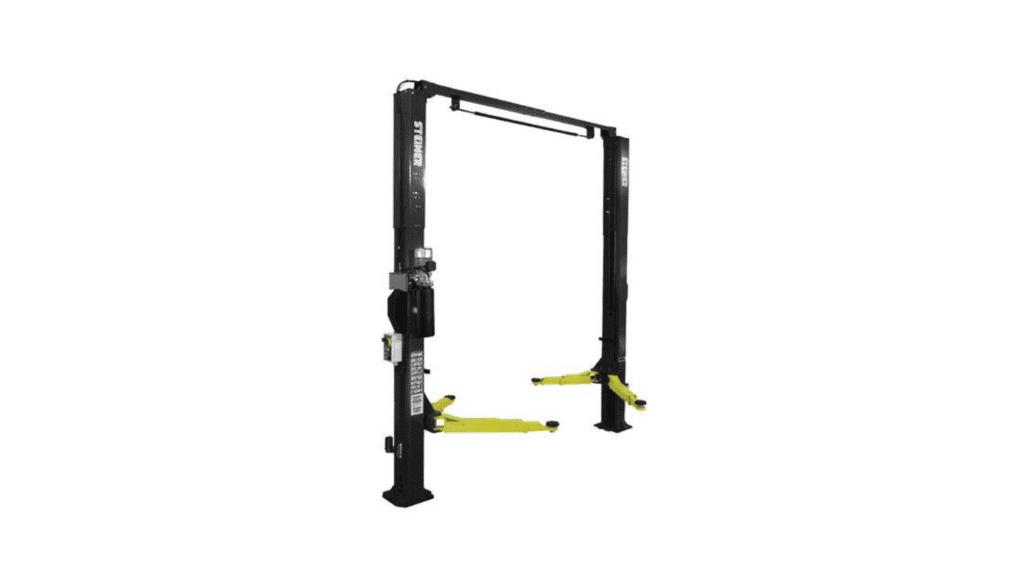
Two-post hoists remain popular for general mechanical servicing because they provide excellent underbody access.
They are suitable for:
- General repairs
- Suspension work
- Brake servicing
- Mechanical inspections
For 2-post hoists, the Steiner LT246CFPRO is one of the best choices for servicing electric vehicles. Thanks to its 4,600 kg lifting capacity, it provides greater capacity for heavier EVs entering workshops, while its clear-floor design and flexible arm configuration give technicians better access and working space around the vehicle.
2. Four-post hoists
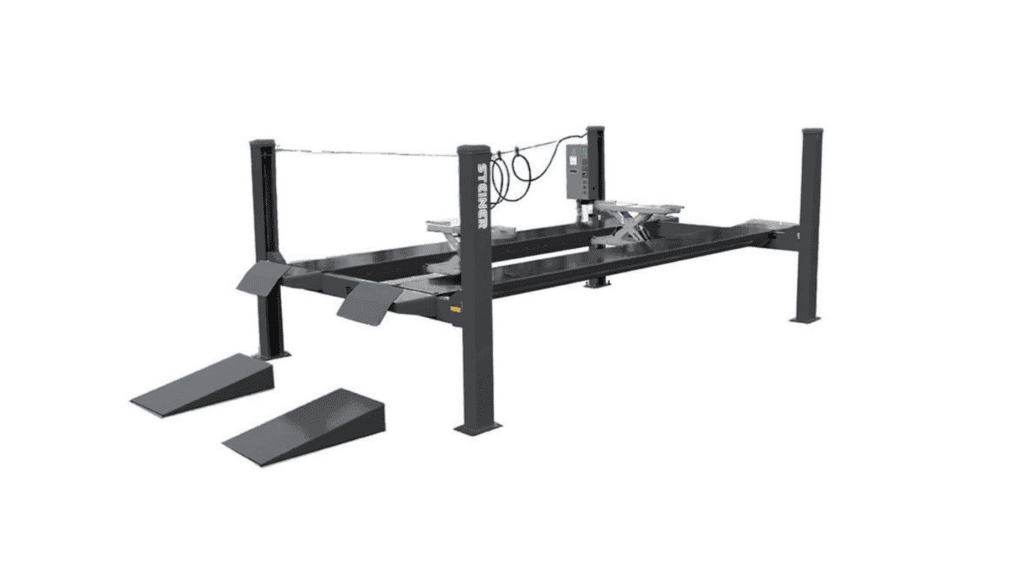
Four-post hoists can provide additional flexibility for:
- Heavier vehicles
- Wheel alignment applications
- Longer vehicle support
- Specialist servicing
When it comes to 4-post hoists, the Steiner LT460APRO is well suited to workshops working with heavier electric vehicles. With a 6,000 kg lifting capacity, it can comfortably accommodate a broad range of EVs, SUVs and commercial vehicles, giving workshops greater flexibility as vehicle weights continue to increase.
3. Scissor lifts
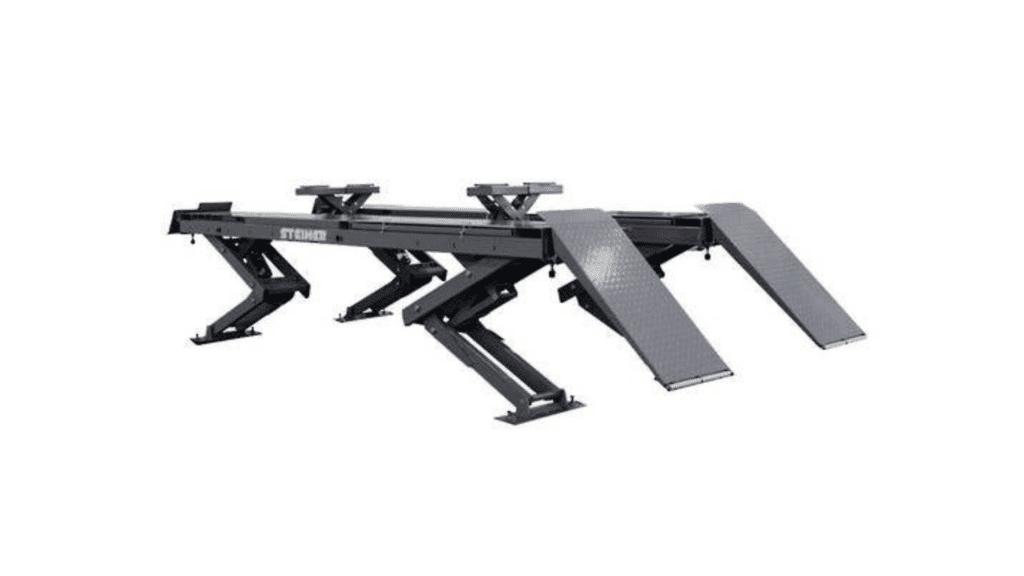
Scissor lifts can be useful for workshops with:
- Limited ceiling height
- Compact service areas
- Tyre and quick-service applications
Among scissor and knuckle lifts, the Steiner LT60KAPRO gives technicians the freedom to work beneath the vehicle without the posts or runways of a traditional hoist getting in the way. Its 6,000 kg lifting capacity and knuckle-lift configuration provide the clearance and flexibility needed for jobs such as battery, suspension and underbody work across a broad range of heavier EVs.
Ultimately, the best lifting solution depends on the vehicles being serviced, available workshop space, and the type of work performed.
➤ Check out our range of 2-post hoists, 4-post hoists, and scissor lifts.
EV Safety Considerations That Affect Workshop Design
EVs introduce additional safety considerations because of their high-voltage electrical systems.
Workshop design needs to support safe working procedures and technician training.
High-Voltage Systems
EV batteries and electrical systems operate at significantly higher voltages than traditional vehicle electrical systems.
Technicians require appropriate training, tools, and manufacturer-approved isolation procedures when working around these systems.
Workshop planning should consider:
- Safe working practices
- Correct equipment storage
- Technician access
- Vehicle isolation procedures
Damaged EV Handling
Accident-damaged EVs can require additional consideration due to battery-related risks. Workshops should also have procedures for responding to damaged high-voltage batteries or suspected thermal events in accordance with manufacturer guidance and local emergency procedures.
Workshops that handle damaged vehicles may need procedures for:
- Vehicle assessment
- Safe storage
- Isolation requirements
- Communication between teams
Planning these processes before they are needed helps prevent workflow disruptions.
H&G Workshop Pro Tip
Safety procedures are easier to follow when the workshop layout supports them. Clear vehicle movement paths, organised equipment storage, and designated work areas help technicians complete jobs efficiently while maintaining a safer working environment.
The Role of Workshop Equipment in EV Readiness
Preparing for EV servicing involves more than car hoists.
Several pieces of workshop equipment remain important as vehicle technology changes.
1. Wheel Alignment Equipment
EVs still require accurate wheel alignment.
In fact, alignment can become even more important because:
- EV torque delivery can increase tyre wear
- Vehicle weight can affect suspension behaviour
- Accurate alignment supports tyre life and efficiency
➤ Browse our full range of wheel aligners.
2. Tyre Equipment
EVs place unique demands on tyres due to:
- Increased vehicle weight
- Instant torque delivery
- Different noise requirements
Reliable tyre servicing equipment remains essential for workshops supporting EV customers.
➤ Explore our tyre changers.
3. Diagnostic Equipment
Like many modern vehicles, EVs often incorporate advanced driver assistance systems (ADAS), increasing the need for accurate calibration equipment and suitable workshop space after certain repairs.
EV workshops need diagnostic capability to support:
- System checks
- Fault identification
- Vehicle communication
- Software updates and system programming where required
H&G Workshop Pro Tip
A capable EV workshop requires the right combination of lifting equipment, diagnostic tools, servicing equipment, technician knowledge, and efficient workflow processes. Upgrading one area while ignoring others may limit the benefits of your investment.
How EVs Create New Opportunities for Workshops
While EVs introduce new challenges, they also create new opportunities.
Workshops that prepare early can expand their service capabilities and become trusted providers for EV owners, dealerships, and fleet operators.
Potential EV-related services include:
- EV inspections
- Battery health checks
- Tyre servicing
- Wheel alignment
- Suspension repairs
- ADAS calibration
- Fleet EV maintenance
As more businesses transition to electric fleets, demand for capable servicing providers is likely to increase.
Practical Steps to Make Your Workshop EV Ready
Workshops do not need to completely redesign their facilities overnight.
A practical approach is to review current capabilities and plan future improvements.
1. Review Your Workshop Layout
Assess:
- Vehicle movement paths
- Available bay space
- Equipment placement
- Technician workflow
Identify areas where EV servicing may create additional requirements.
2. Evaluate Existing Equipment
Review whether your current equipment and workshop infrastructure can support future vehicle servicing.
Consider:
- Hoist capacity
- Wheel alignment capability
- Diagnostic equipment
- Tyre equipment
- Battery handling equipment (where applicable)
- Electrical supply capacity
- Future charging infrastructure
3. Invest in Technician Training
Equipment alone does not make a workshop EV ready.
Technicians need appropriate knowledge of:
- EV systems
- Safety procedures
- Manufacturer requirements
- Diagnostic processes
4. Prioritise Flexible Investments
When upgrading workshop equipment, choose solutions that support a wide range of vehicles and applications.
Flexible equipment provides greater long-term value and helps workshops adapt as vehicle technology continues to evolve.
H&G Workshop Pro Tip
Before upgrading equipment or changing your workshop layout, review your current workflow. Identify where vehicles spend time, where technicians experience delays, and which equipment creates bottlenecks. This helps ensure future investments deliver measurable improvements.
Frequently Asked Questions
What changes are needed to make a workshop EV ready?
Making a workshop EV ready may require updates to equipment, technician training, safety procedures, and workshop layout. The exact requirements depend on the types of EVs being serviced and the services offered.
Do EVs require different workshop equipment?
EVs may require different equipment considerations, including suitable-capacity car hoists, diagnostic equipment, specialised tools, and safety equipment.
Can existing vehicle hoists lift electric vehicles?
Some existing hoists may be suitable for certain EVs, but workshops should confirm lifting capacity, vehicle weight, and manufacturer lifting requirements before servicing newer EV models.
Are EVs harder to service than petrol vehicles?
EVs often have fewer traditional mechanical components but require specialised knowledge of electrical systems, batteries, diagnostics, and vehicle electronics.
Should workshops create a dedicated EV service bay?
A dedicated EV service area can improve organisation, safety, and workflow, particularly for workshops servicing larger numbers of electric vehicles.
Do workshops need special certification to service EVs?
Requirements vary by manufacturer and jurisdiction. While general maintenance may not require manufacturer certification, technicians working on high-voltage systems should complete appropriate EV safety training and follow manufacturer procedures.
Can existing workshops be converted for EV servicing?
Yes. Most existing workshops can be adapted for EV servicing without requiring a complete rebuild. In many cases, improvements such as suitable-capacity hoists, technician training, updated safety procedures, diagnostic equipment, and thoughtful workshop layout changes can help prepare a workshop for servicing electric vehicles.
Building a Workshop Ready for the Future
EVs are changing how automotive workshops need to think about space, equipment, and workflow.
The workshops that succeed will not simply add EV tools. They will create flexible facilities designed around the future needs of vehicle servicing.
By reviewing workshop layouts, investing in technician training, and upgrading the right lifting and workshop equipment, businesses can improve productivity while preparing for the next generation of vehicles.
Hoist & Garage helps automotive workshops prepare for the future of vehicle servicing with vehicle hoists, workshop equipment solutions, professional installation, servicing, and preventative maintenance designed around real-world workshop requirements.
Talk to us about preparing your auto workshop for electric vehicles.