
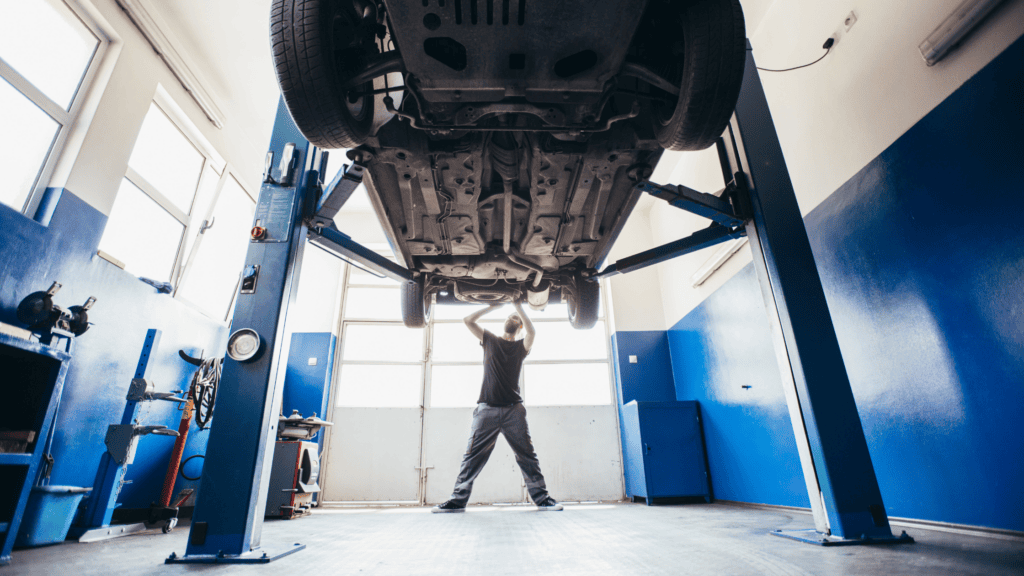
A failed hoist can bring a workshop bay to a standstill.
For workshop owners, equipment maintenance is about more than keeping machines running. It’s about preventing downtime where it has the biggest impact on the business.
So, where should you focus first?
For us, it’s less about how often a machine is used and more about what happens when something goes wrong.
A tyre changer stopping halfway through the day is a pain. You can usually get it sorted, swap the machine out and have the tyre bay running again without too much disruption.
A failed hoist is a different story. If a vehicle is stuck on it, you can’t just move the hoist out of the way and bring another one in. The bay is tied up, the job can’t be finished, and the knock-on effect can quickly spread to the rest of the day’s work.
That’s the difference worth keeping in mind when putting together a maintenance plan.
Hoists come first
If there’s one area we wouldn’t cut corners on, it’s vehicle lifting equipment.
Two-post hoists, four-post hoists, scissor lifts and in-ground hoists all have one important job: keeping a vehicle safely off the ground while people are working underneath it.
It’s worth getting into the habit of looking at the things that take the most punishment. These include your hoists’:
- Locks and safety latches
- Arms
- Cables
- Hydraulic components
- Anchorages
Some things can be picked up during a normal visual check, while others need a closer inspection or service.
The manufacturer’s maintenance instructions should be the first reference point. There are also standards that apply, including AS/NZS 1418.9 for vehicle hoists and AS/NZS 2550.9 for their safe use.
And if something doesn’t look or feel right, don’t wait for the next scheduled service to do something about it.
➤ Check out our full range of single-post hoists, two-post hoists, four-post hoists, scissors and knuckle lifts.
The compressor is easy to forget
The compressor is often one of those machines nobody thinks about until it stops.
It’s worth giving it some attention before that happens. Check for leaks, damaged hoses and couplings, and make sure guards and pressure relief systems are in good order. Keep up with the servicing the manufacturer specifies, including things like condensate draining, oil and belt checks where applicable.
If your workshop has pressure equipment covered by NZ regulations, check whether there are inspections or certification requirements that apply to it.
Electrical equipment takes a beating
Power leads, chargers, hand tools and other electrical equipment see plenty of use in a workshop. They’re dragged around, knocked over, and exposed to an environment where oil and water are part of everyday life.
A quick check can catch a lot. Damaged leads, plugs, casings, guards or signs of overheating shouldn’t be ignored.
There’s also a common misconception around tests and tags. NZ doesn’t have a blanket rule requiring every piece of electrical equipment to be tested and tagged every six months. The requirement is that electrical equipment is electrically safe and maintained in a safe condition. How often it should be inspected or tested depends on the equipment and the conditions it’s being used in.
For equipment such as RCDs, switchboards, and EV service equipment, make sure the required work is being done by someone appropriately qualified.
Don’t forget the equipment that’s there for when things go wrong
Fire extinguishers, eyewash stations, spill kits, and emergency equipment aren’t used every day. That’s probably why they’re easy to overlook.
But finding an extinguisher hasn’t been properly maintained when you need it isn’t something you want to discover.
The same goes for exhaust extraction and ventilation. If the system isn’t working properly, the problem isn’t just that the workshop feels stuffy. You’re relying on it to remove exhaust gases and other contaminants from the working environment.
These things don’t need to be complicated. Check them, maintain them, and make sure they’re still accessible and doing what they’re supposed to do.
Then there’s everything else
Once the higher-risk equipment is covered, move on to the rest.
Tyre changers, wheel balancers, brake service equipment, diagnostic tools and calibration equipment all need to look after. They might not carry the same consequences as a failed hoist, but problems with them can still affect safety and the quality of the work.
A tyre changer with a worn component can put the operator at risk. A wheel balancer that’s out of calibration isn’t going to give you much confidence in the result.
A simple way to work out what comes first
You don’t need a complicated spreadsheet to get started.
For each piece of equipment, ask:
- What happens if it fails?
- How likely is that happening?
- Is there a manufacturer, regulatory, or standards requirement for it?
That will quickly separate the equipment that needs close attention from the stuff that can sit further down the list.
From there, it’s mostly about being consistent. Follow the manufacturer’s service requirements, get technicians to mention problems they find during their normal checks, and keep a record of what’s been inspected and what needs attention.
A plant and equipment register is useful for this. It doesn’t need to be elaborate. You just need to know what equipment you have, when it was last checked, whether anything was found and when it needs looking at again.
That’s also the practical side of what WorkSafe NZ expects when it comes to managing machinery risks. Equipment needs to be kept safe, and businesses need to identify and manage the risks that come with using it.
If you’re deciding where to put your maintenance time, start with the equipment you really don’t want to fail. For most workshops, that’s going to mean the hoists, pressure equipment, electrical systems and other safety-critical gear.
Once those are under control, you can work your way through the rest.
Talk to us about servicing, repairs, maintenance and certification. Give us a call at 0800 436 436 or email us at bookings@hoistandgarage.co.nz.