
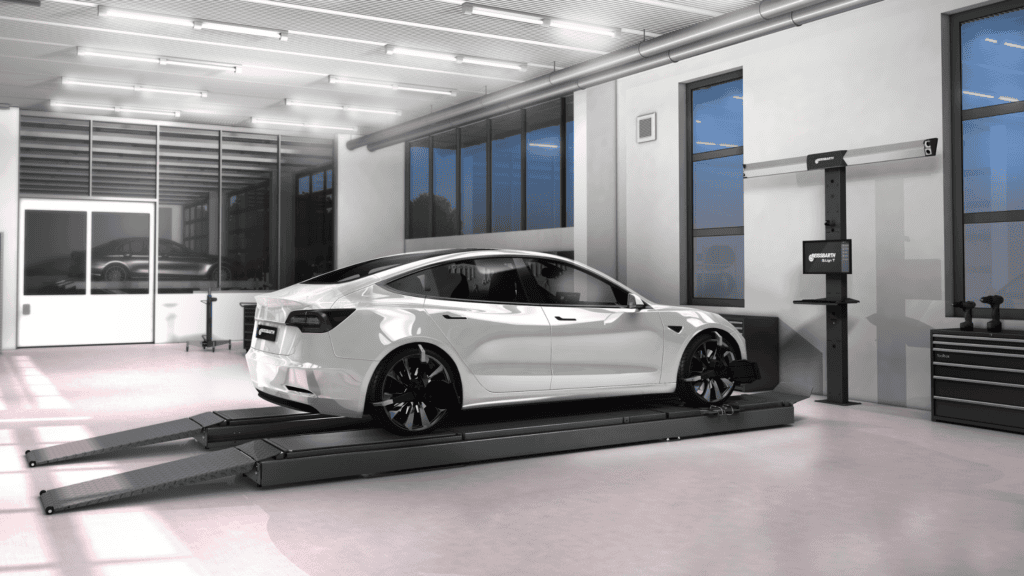
A wheel alignment bay sits at a critical point in the workshop workflow, often following steering, suspension or tyre work before a vehicle is ready for final inspection and handover.
Because these repairs can change vehicle geometry, wheel alignment should only be completed once all related work is finished. A typical workflow moves from vehicle inspection and diagnosis through repairs, tyre services, wheel alignment, and final quality inspection.
For example, a vehicle with uneven tyre wear may require suspension repairs before new tyres are fitted. Once repairs are complete and the wheels are balanced, the vehicle moves to the alignment bay for final adjustment.
The best place to position a wheel alignment bay is near the services that most commonly require alignment work, including suspension repairs, steering repairs, tyre replacement and wheel balancing. A workflow-based layout reduces vehicle movement, improves technician efficiency, and helps maximise workshop throughput.
Whether you are installing a wheel alignment hoist in an existing workshop or designing a new alignment bay from scratch, the location should be based on workflow, not simply where floor space is available.
Map Your Vehicle and Technician Workflow First
Before installing a wheel alignment system or deciding where your alignment bay should go, first understand how vehicles and technicians move through your workshop.
Many workshops make the mistake of placing equipment wherever space is available and then adapting their workflow around it. A better approach is to identify your most common repair processes and position each workstation around those movements.
A typical workshop workflow may move through:
- Vehicle reception and inspection
- Mechanical diagnosis
- Suspension, steering or brake repairs
- Tyre replacement and wheel balancing
- Wheel alignment
- Final inspection
- Customer collection
A logical sequence reduces unnecessary vehicle movement, waiting time and interruptions between work areas.
However, workshop efficiency is not only about where vehicles travel. Technician movement also has a major impact on productivity.
Every unnecessary step between the alignment bay, tools, diagnostic equipment and parts storage reduces the time technicians spend diagnosing faults, completing repairs and servicing vehicles.
A well-planned alignment area should keep frequently used resources within easy reach, including:
- Alignment accessories
- Diagnostic equipment
- Tools
- Parts storage
- Air and power connections
H&G Workshop Pro Tip
Many workshop owners start by asking: “Where can we fit this equipment?”
A better question is: “How should vehicles and technicians move through our workshop from arrival to completion?”
Planning workflow first helps position your alignment bay where it supports productivity rather than creating bottlenecks.
Place the Alignment Bay Near Suspension and Steering Repairs
Many wheel alignments are required after replacing suspension or steering components.
Common repairs include:
- Shock absorbers and struts
- Springs
- Tie rods
- Ball joints
- Control arms
- Steering racks
Once these repairs are complete, technicians should be able to move the vehicle directly onto the alignment hoist without crossing the entire workshop.
This is especially important for New Zealand workshops servicing a wide range of vehicles, including SUVs, dual-cab utes, vans, fleet vehicles and light commercial vehicles.
Reducing the distance between repair bays and the alignment area helps maintain workflow momentum and prevents vehicles from becoming obstacles in other work areas.
H&G Workshop Pro Tip
A vehicle movement that takes only a minute may seem insignificant, but repeated dozens of times each week, those minutes add up.
Positioning your alignment bay close to suspension and steering repair areas helps create a smoother process from diagnosis through to final adjustment.
Keep the Alignment Bay Close to Tyre Service Equipment
For tyre retailers and many general automotive workshops, wheel alignment is often the final step after tyre replacement and wheel balancing.
An efficient workflow is:
Tyre replacement → Wheel balancing → Wheel alignment → Final inspection
Positioning the alignment bay near tyre changers, wheel balancers and inflation stations allow technicians to complete the entire tyre service in one dedicated area.
This reduces unnecessary vehicle movement and prevents tyre-related jobs from interrupting other workshop operations.
It also creates a better customer experience. Instead of seeing their vehicle move repeatedly around the workshop, customers benefit from a streamlined service process completed within a dedicated tyre and alignment area.
A well-organised tyre and alignment section can also help technicians identify related suspension, steering, or tyre issues while the vehicle is already being assessed.
Avoid Locations That Create Vehicle Bottlenecks
One of the most common workshop layout mistakes is installing the alignment bay wherever unused floor space happens to be available.
While this may seem practical, the alignment bay should support your workflow rather than force technicians and vehicles to work around it.
If vehicles need to cross active repair areas or navigate around other equipment to reach the alignment hoist, productivity quickly suffers.
Poor alignment bay placement can result in vehicles:
- Crossing active repair bays
- Reversing through busy work areas
- Blocking access to vehicle hoists
- Interrupting technician workflow
- Creating congestion during peak periods
Every unnecessary movement increases delays, reduces workshop efficiency, and limits the number of vehicles your team can complete each day.
Ideally, vehicles should progress naturally through the workshop rather than doubling back or crossing paths with other jobs.
H&G Workshop Pro Tip
High-performing workshops do not rely on technicians to weaving vehicles through busy work areas.
They create a logical workflow where vehicles move naturally from inspection and repairs through to wheel alignment, final checks, and customer collection.
Allow Enough Space Around Your Alignment Bay
The alignment hoist itself is only one part of the required working area.
Vehicles need enough room to approach the hoist in a straight line, drive onto the runways safely and exit without excessive manoeuvring.
This becomes increasingly important when servicing larger vehicles commonly found in New Zealand workshops, including:
- Dual-cab utes
- SUVs
- Long-wheelbase vans
- Light commercial vehicles
- Fleet vehicles
When planning your alignment area, consider:
- Vehicle approach and exit paths
- Turning radius
- Door opening clearance
- Technician access around the vehicle
- Space for alignment equipment and accessories
A cramped alignment bay can slow vehicle positioning, restrict technician movement and make future upgrades more difficult.
Planning sufficient space from the beginning creates a safer and more efficient working environment.
Consider Future Requirements Before Installation
A well-designed alignment bay should support both your current workflow and future workshop growth.
Modern vehicles are becoming larger and more technologically advanced, creating new workshop requirements such as ADAS calibration and advanced diagnostics.
When choosing an alignment bay location, consider future requirements such as:
- ADAS calibration equipment
- Larger vehicle sizes
- Additional diagnostic equipment
- Future workshop expansion
Allowing extra space around the alignment area can prevent costly modifications later and give your workshop greater flexibility as vehicle technology changes.
H&G Workshop Pro Tip
Design your alignment bay for where your workshop is heading, not just where it is today.
A little extra planning during installation can help protect your investment and make future upgrades easier.
Common Wheel Alignment Bay Layout Mistakes
Even experienced workshop owners can overlook important planning considerations.
Common mistakes include:
- Installing the alignment bay based only on available floor space
- Positioning it too far from suspension or tyre service areas
- Providing insufficient vehicle access space
- Creating vehicle bottlenecks through shared access routes
- Ignoring technician movement between workstations
- Failing to allow room for future equipment
Avoiding these mistakes during the planning stage helps create a workshop that remains efficient, safe and productive for years.
Frequently Asked Questions
Where is the best place to position a wheel alignment bay?
The ideal location is close to related services such as suspension repairs, steering repairs, tyre changers and wheel balancers. Positioning the alignment bay around your workshop workflow reduces unnecessary vehicle movement and improves technician efficiency.
How much space should I allow around a wheel alignment hoist?
You need more than the footprint of the alignment hoist. Allow enough room for vehicle approach and exit, technician access, alignment equipment, larger vehicles and future requirements such as ADAS calibration systems.
Should a wheel alignment bay be located next to tyre fitting equipment?
Yes. Many wheel alignments are completed after tyre replacement and wheel balancing. Keeping these services together creates a more efficient workflow and reduces unnecessary vehicle movement.
Should I consider ADAS calibration when designing an alignment bay?
Yes. Many modern vehicles require accurate wheel alignment before ADAS calibration can be performed. Planning enough space around the alignment area helps future-proof your workshop.
Position Your Alignment Bay for Long-Term Productivity
A wheel alignment bay should never be treated as an afterthought.
Its location influences technician efficiency, vehicle movement, workshop safety, service capacity and ultimately the profitability of your business.
The most effective workshops do not simply install equipment where space is available. They design every service area around how technicians work and how vehicles move from arrival to customer handover.
By positioning your alignment bay near related services, allowing sufficient access space and planning for future technology, you can create a workshop that operates efficiently today while remaining adaptable for years to come.
At Hoist & Garage, we support workshops and dealerships across NZ with their wheel alignment equipment, from choosing and installing the right system to servicing, maintenance, repairs and certification. Our team can help keep your wheel aligner working accurately, safely and reliably.
We supply and install a full range of wheel aligners, from mobile fast first-measure units to fixed-post systems, with servicing and technical support available for your existing equipment.
Talk to our team about your wheel alignment equipment, whether you need a new system, servicing, repairs or certification.