
Bay utilisation measures how effectively an automotive workshop uses its available service bays by comparing productive vehicle work time against total available bay hours. By tracking usage, workshops can identify workflow bottlenecks, reduce downtime, improve vehicle throughput, and make better decisions about equipment, staffing, and future expansion.
Your workshop may already have more capacity than you realise.
Many workshop owners assume increasing vehicle throughput requires more floor space, additional technicians, or extra equipment. While these investments can support growth, they are not always the first solution. In many cases, the biggest opportunities come from understanding how effectively existing service bays are being used.
This is where measuring bay utilisation becomes valuable.
Bay usage provides insight into how much of your available workshop capacity is being used productively. It helps identify whether bays are sitting empty, vehicles are waiting unnecessarily, equipment is creating bottlenecks, or workflow issues are slowing down vehicle movement.
By measuring and improving bay utilisation, workshops can increase productivity, reduce downtime, improve customer turnaround times, and get more value from their existing equipment and workspace.
What Is Bay Utilisation in an Automotive Workshop?
Bay utilisation measures how effectively a workshop converts available service bay time into productive vehicle work. It provides a clear picture of whether workshop space, technicians, and equipment are being used efficiently.
Put simply, bay capacity compares the amount of time a bay is actively being used for productive work against the total time available.
The workshop bay usage formula is:
Bay Utilisation (%) = Productive Bay Hours ÷ Available Bay Hours × 100
For example:
A workshop operates 8 hours per day with five service bays.
Available capacity: 5 bays × 8 hours = 40 available bay hours
If those bays spend 28 hours actively servicing vehicles:
28 ÷ 40 × 100 = 70% bay utilisation
This means the workshop is using 70% of its available bay capacity for productive work. The remaining 30% represents unused capacity, delays, or time that is not contributing directly to completed vehicle work.
A higher usage percentage does not always mean a better-performing workshop. The goal is not to keep every bay occupied at all times, but to maximise productive vehicle work while maintaining efficient workflow and service quality.
Effective bay usage focuses on how efficient workshop space, technicians, and equipment are working together.
Service bay capacity is particularly valuable for dealerships, fleet workshops, and busy independent repair centres where small workflow improvements can significantly increase vehicle throughput.
H&G Workshop Pro Tip
A workshop can look fully occupied while still losing valuable capacity. A vehicle sitting in a bay waiting for parts, approvals, or another technician is taking up space but not contributing to productive output. When measuring bay utilisation, focus on active repair and servicing time rather than simply counting how long vehicles remain in the workshop.
Why Measuring Bay Capacity Matters
Without measuring bay utilisation, it can be difficult for workshop managers to understand where capacity is being lost.
A workshop may appear fully booked while still experiencing hidden inefficiencies. These small inefficiencies add up.
For example:
- A vehicle may occupy a service bay while waiting for parts.
- Technicians may spend excessive time moving vehicles around the workshop.
- A single piece of equipment may become a bottleneck.
- A hoist may sit unavailable due to overdue maintenance.
- Jobs may be scheduled without considering realistic completion times.
By keeping a close eye on your workshop’s bay utilisation, you can experience the following benefits:
1. Improve workshop productivity
Understanding bay utilisation helps identify where time is being lost and where improvements can be made. Instead of guessing why vehicle throughput is limited, workshop managers can use real data to make better decisions.
2. Increase revenue potential
An unused service bay represents unused capacity. Improving workflow efficiency can allow workshops to complete more jobs without immediately expanding their premises.
3. Improve equipment return on investment
Workshop equipment such as vehicle hoists, wheel aligners, tyre changers, and diagnostic tools represent significant investments. These assets provide greater value when they support efficient vehicle movement and productive work.
4. Make smarter expansion decisions
Before investing in additional space or equipment, workshops should understand whether existing output is being fully utilised. Improving current processes may deliver significant gains without major capital investment.
H&G Workshop Pro Tip
Low bay utilisation is not always caused by a lack of customers or insufficient floor space. In many cases, the issue is a bottleneck somewhere in the workflow, such as limited lifting equipment, poor vehicle movement, or delays between repair stages. Tracking where vehicles spend time can help identify the areas creating the biggest impact on productivity.
➤ Need help? Give us a call so we can help you work out where your capacity is being lost.
How to Measure Workshop Bay Utilisation
Measuring bay utilisation does not need to be complicated. The process starts with understanding available bay capacity and comparing it against the time actually spent completing vehicle work.
1. Calculate Available Bay Hours
First, determine how much available bay capacity your workshop has.
Consider:
- Number of service bays
- Operating hours
- Number of working days
- Technician availability
For example:
A workshop with six bays operating 9 hours per day, five days per week has:
6 bays × 9 hours × 5 days = 270 available bay hours per week
This represents the workshop’s available bay capacity before accounting for delays, equipment downtime, or other non-productive activities.
2. Track Productive Bay Hours
Next, measure how much time each bay is actively working on vehicles.
Productive activities may include:
- Vehicle servicing
- Mechanical repairs
- Diagnostics
- Inspections
- Wheel alignment work
- Maintenance tasks
Non-productive time may include:
- Waiting for parts
- Waiting for customer approval
- Vehicles waiting for collection or occupying bays after completion
- Delays caused by equipment issues
- Technician waiting time
Tracking these delays helps reveal where workshop capacity is being lost.
3. Track Usage by Individual Bay
Measuring usage across individual bays can reveal hidden problems. One bay may be operating at 90% utilisation while another sits underused due to equipment limitations, job allocation issues, or layout problems.
4. Calculate Your Bay Utilisation Rate
Once available hours and productive hours are known, calculate the percentage.
For example:
A workshop has 270 available bay hours per week.
Technicians complete 190 hours of productive work.
190 ÷ 270 × 100 = 70% bay utilisation
This provides a starting point for understanding how efficiently workshop space is being used.
H&G Workshop Pro Tip
Start by measuring where time is being lost rather than trying to immediately increase bay usage. Accurate data helps identify whether the real constraint is equipment availability, scheduling, technician workflow, vehicle movement, or workshop layout.
What Is a Good Bay Utilisation Rate?
There is no single usage percentage that works for every workshop. Many aim for strong utilisation without operating at full capacity because some flexibility is needed for urgent repairs, inspections, customer delays, and unexpected jobs.
A busy dealership workshop, independent repair centre, fleet maintenance facility, and specialist workshop will all operate differently.
The right level depends on factors such as:
- Workshop size
- Vehicle types serviced
- Job complexity
- Technician numbers
- Equipment availability
- Customer demand
A low usage rate may indicate:
- Poor scheduling
- Unused workshop capacity
- Workflow problems
- Equipment limitations
However, extremely high usage can also create challenges.
When every bay is occupied constantly, workshops may struggle with:
- Urgent repair requests
- Unexpected delays
- Technician pressure
- Longer customer wait times
The goal is not simply filling every bay. The goal is creating a smooth workflow where technicians, equipment, and vehicles move efficiently through the workshop.
For many workshops, improving utilisation from inefficient processes is more valuable than simply increasing the percentage of occupied bays.
H&G Workshop Pro Tip
A fully occupied workshop does not always mean a productive workshop. If technicians are constantly waiting for equipment, vehicles are delayed between repair stages, or bays are blocked by unfinished jobs, high occupancy can actually reduce overall efficiency.
4 Reasons Your Workshop Bays Are Losing Productivity
Several hidden workflow issues can reduce bay usage even when customer demand is strong.
1. Poor Workshop Scheduling
One of the most common causes of inefficient bay use is inaccurate scheduling.
Examples include:
- Booking complex jobs without enough allocated time
- Scheduling too many vehicles at once
- Failing to match jobs with technician capability
Better scheduling helps ensure vehicles arrive at the right time and the right resources are available.
2. Vehicles Waiting in Service Bays
A vehicle occupying a bay is not always creating productivity.
Common causes of bay delays include:
- Waiting for replacement parts
- Waiting for customer approval
- Waiting for diagnostic information
- Waiting for another technician
Improving communication before vehicles enter the workshop can reduce unnecessary bay occupation.
3. Equipment Bottlenecks
Workshop equipment can directly influence bay usage.
Examples:
- Multiple technicians sharing one alignment bay
- Limited access to lifting equipment
- Equipment downtime delaying repairs
A workshop may have enough physical space but still struggle with throughput because critical equipment becomes a bottleneck.
4. Inefficient Workshop Layout
Workshop layout plays a major role in productivity.
Poor layouts can create:
- Excessive vehicle movement
- Technicians walking unnecessarily
- Congestion around equipment
- Delays moving vehicles between work areas
A well-designed workshop allows vehicles to move logically from one stage of repair to the next.
How Vehicle Hoists Influence Bay Utilisation
A vehicle hoist is more than just lifting equipment. It directly affects how effectively a service bay operates.
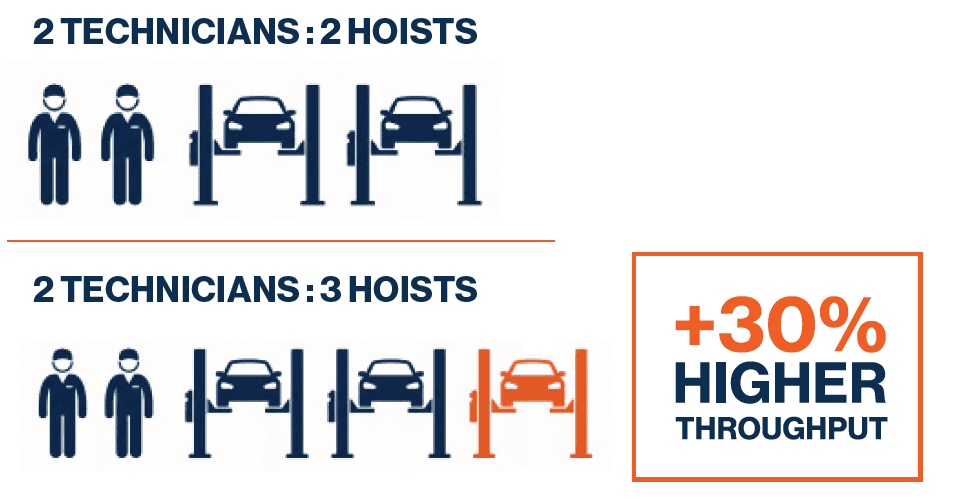
Hoist availability can also have a measurable impact on workshop throughput. A recent study on workshop productivity suggests that workshops with 1.5 hoists per technician achieved 30% higher throughput than workshops operating with a 1:1 hoist-to-technician ratio. While the right ratio will vary between workshops, the finding highlights how limited access to lifting equipment can become a bottleneck.
The wrong lifting solution can create hidden productivity losses by limiting the types of work a bay can perform, creating equipment bottlenecks, or forcing technicians to spend more time positioning vehicles.
For example, a workshop performing regular wheel alignment work may lose productivity if vehicles need to be moved between bays because the available lifting equipment does not support alignment requirements.
The right hoist can improve:
1. Technician efficiency
A suitable hoist allows technicians to access vehicles comfortably and complete work more efficiently.
2. Vehicle turnaround times
Faster vehicle positioning and improved access can reduce delays during servicing and repairs.
3. Workshop flexibility
Different hoist designs support different workflows.
For example:
- Two-post hoists are commonly used for general mechanical repairs where underbody access is required.
- Four-post hoists can support larger vehicles, wheel alignment work, and longer-term vehicle positioning.
- Scissor lifts can provide solutions for workshops with limited ceiling height or compact service areas.
4. Bay versatility
A workshop with the right mix of lifting equipment can adapt more easily to different vehicle types and repair requirements. This flexibility helps prevent certain bays from becoming restricted to only specific jobs.
Choosing equipment that matches your workshop requirements helps maximise the productivity of every bay.
H&G Workshop Pro Tip
The best hoist for your workshop depends on the type of vehicles you service and the work you perform every day. A general repair workshop may benefit from flexible two-post hoists, while alignment bays, commercial vehicle servicing, and specialist repairs may require different lifting solutions. Choosing equipment based on workflow rather than price alone helps maximise the productivity of each service bay.
Why Equipment Maintenance Is Important for Bay Utilisation
Workshop equipment downtime directly affects vehicle throughput.
A failed hoist can effectively remove an entire service bay from operation, reducing capacity until repairs are completed.
Common equipment issues that can reduce utilisation include:
- Hydraulic faults
- Electrical problems
- Safety lock issues
- Mechanical wear
- Unexpected breakdowns
Preventative servicing helps identify problems before equipment failure removes a bay from operation. It also allows workshops to plan maintenance around quieter periods rather than dealing with unexpected interruptions during busy trading hours.
Regular hoist inspections and maintenance help workshops:
- Reduce unexpected downtime
- Maintain safe operation
- Extend equipment life
- Keep technicians working efficiently
Reliable equipment is an important part of maintaining consistent workshop throughput.
Metrics to Track Alongside Bay Utilisation
Bay usage provides valuable insight, but it should be measured alongside other workshop performance indicators.
Important metrics include:
1. Vehicle Turnaround Time
Measures how long vehicles remain in the workshop from arrival to completion.
Long turnaround times may indicate workflow delays.
2. Jobs Completed Per Bay
Shows how effectively each service bay contributes to workshop output.
3. Technician Productivity
Measures how efficiently labour hours are converted into completed work.
4. Equipment Downtime
Tracks lost productivity caused by unavailable tools or equipment.
5. First-Time Completion Rate
Identifies whether vehicles require additional work due to missed issues or incomplete repairs.
Together, these measurements provide a clearer picture of workshop performance.
Practical Ways to Improve Bay Usage
Once inefficiencies are identified, workshops can take practical steps to improve productivity.
1. Improve Job Scheduling
Allocate realistic timeframes based on job complexity.
Avoid overloading technicians with unrealistic booking schedules.
2. Prepare Vehicles Before They Enter Bays
Confirm:
- Parts availability
- Required equipment
- Technician availability
- Customer approval
Reducing delays before a vehicle enters the workshop helps maximise bay usage.
3. Maintain Workshop Equipment
Regular servicing prevents equipment failures that interrupt workflow.
A reliable hoist or alignment system helps technicians complete work without unnecessary delays.
4. Review Workshop Layout
Small layout improvements can make a significant difference.
Consider:
- Equipment placement
- Vehicle movement paths
- Technician access
- Storage locations
5. Monitor Performance Regularly
Bay utilisation should be reviewed consistently rather than measured once.
Regular tracking helps identify changes in workflow and highlights new opportunities for improvement.
6. Standardise Workshop Processes
Creating consistent processes for vehicle intake, diagnosis, repair approval, and completion reduces delays between workflow stages and helps technicians spend more time performing productive work.
H&G Workshop Pro Tip
Before making major investments, measure how vehicles currently move through your workshop. Understanding where time is spent, where delays occur, and how equipment is being used provides the information needed to make smarter decisions about layout, staffing, and future equipment upgrades.
➤ Book your next service, certification or repair with us and keep your workshop equipment operating as it should.
How Often Should Workshops Measure Bay Usage?
Bay utilisation should be reviewed regularly rather than measured once. Monthly reviews can help identify changing workflow patterns, seasonal demand changes, equipment limitations, and opportunities to improve productivity.
Frequently Asked Questions
How do you calculate bay usage?
Bay utilisation is calculated by dividing productive bay hours by total available bay hours and multiplying the result by 100. This shows what percentage of workshop capacity is being used for active vehicle work.
What is a good workshop bay utilisation rate?
A good bay usage rate depends on the workshop type, staffing levels, services offered, and operating model. The goal is to maximise productive use of workshop space while maintaining efficient workflow and service quality.
How can workshops improve bay capacity?
Workshops can improve bay capacity by reducing vehicle waiting times, improving scheduling accuracy, maintaining equipment reliability, and creating a more efficient workshop layout.
Can adding more hoists improve bay usage?
Additional hoists can improve capacity when existing equipment is limiting workflow. However, workshops should first identify whether the main issue is equipment availability, scheduling, layout, or another process bottleneck.
How can a workshop increase bay usage without expanding?
Workshops can improve bay utilisation by reducing delays, improving scheduling, maintaining equipment reliability, and optimising workshop layout before investing in additional space.
Does adding more hoists increase workshop productivity?
Additional hoists can increase productivity when lifting capacity is limiting workflow. However, workshops should first identify whether the real constraint is equipment availability, scheduling, technician capacity, or workshop layout.
What is the difference between bay usage and technician productivity?
Bay usage measures how effectively workshop space is being used, while technician productivity measures how efficiently labour hours are converted into completed work. Both metrics work together to provide a clearer picture of overall workshop performance.
Turn Existing Workshop Space Into Greater Capacity
Measuring bay capacity helps workshops understand how effectively they are using their existing resources.
By identifying where time is lost, improving workflow, maintaining reliable equipment, and making informed decisions about workshop layout and equipment, businesses can increase vehicle throughput without immediately expanding their footprint.
The most productive workshops are not always the largest. They are the ones that make the best use of every bay, every technician, and every piece of equipment.
Before adding more floor space or equipment, it pays to understand where your current capacity is being lost. Hoist & Garage can help identify workflow and equipment constraints, then recommend practical solutions to make better use of your existing workshop.
Contact us to discuss your workshop requirements and find out where you can improve your capacity and throughput.